

How RNA-Seq Reveals What Genes Are Saying
Learn how RNA-Seq uncovers hidden biological mechanisms through real-world examples
RNA sequencing (RNA-Seq) is one of the most powerful methods for examining gene activity and understanding how cells respond to different biological or chemical conditions such as drug treatment, infection, or genetic perturbation. It profiles the entire set of RNA molecules within a cell or tissue, revealing which genes are active, how strongly they’re expressed, and how those patterns shift across states such as health, stress, disease, or drug treatment.
By quantifying gene expression across thousands of transcripts and detecting events such as alternative splicing or sequence variation, RNA-Seq provides an unbiased view of cellular function. Unlike targeted methods, it doesn’t force you to pick candidate genes ahead of time. Because it captures these changes directly at the transcriptional level, RNA-Seq has become an essential tool for uncovering molecular mechanisms and identifying potential therapeutic targets during early stages of drug discovery.
Why RNA-Seq Changed the Game
Before RNA-Seq, gene expression analysis relied heavily on PCR and microarrays. While these methods were useful, they had a major limitation: they could measure only pre-selected genes, requiring prior knowledge of which genes to investigate.
RNA-Seq largely overcomes this limitation. By sequencing the vast amount of RNA from millions of cells in a sample, researchers can for example:
Discover rare or novel transcripts
RNA-Seq can reveal previously undetectable changes in genes that contribute to disease or treatment. For example, studies of neuromuscular disorders uncovered a hidden segment (a pseudo-exon) in the DYSF gene, directly linking RNA-level alterations to disease mechanisms that DNA-based tests had missed in these patients (Gonorazky et al.,)Detect regulatory RNAs (lncRNAs, miRNAs)
RNA-Seq also captures regulatory RNAs such as lncRNAs and miRNAs, which play key roles in controlling gene expression. Studies show that changes in these non-coding RNAs often accompany shifts in messenger RNA (mRNA) levels, revealing regulatory networks that drive disease progression. This makes RNA-Seq essential for understanding not just which genes change, but why they change. (Ma,Wang et al.,).Identify disease subtypes based on subtle expression differences
Large-scale RNA-Seq studies have revealed new molecular subtypes of diseases that traditional analysis could not distinguish. For example, work on immune cell transcriptomes in severe COVID-19 identified patient groups with distinct immune-response patterns, which informed patient stratification and therapeutic hypotheses (Schulte-Schrepping, Baßler et al.,).Map transcriptomic changes onto biological pathways
RNA‑Seq doesn’t just highlight individual genes — it shows how groups of genes interact within pathways. In clinical diagnostics, pathway analysis helps identify which signaling cascades are disrupted in patient samples, improving diagnosis and prognosis (Engelthaler et al.,). In drug and biomarker discovery, pathway analysis connects drug induced gene expression changes to biological processes, uncovering mechanisms of action, predicting toxicity, and highlighting novel therapeutic targets (Yang X. et al.,).
👉 Activate agentic AI to uncover hidden gene activity. Explore differential expression in real time with our aimed analytics platform
The Next Evolution: Single-Cell Resolution
Bulk or population-based RNA-Seq measures the average expression across all cells in a sample. This masks subtle but important differences between individual cells. The field has since evolved to single-cell RNA sequencing (scRNA-Seq), which profiles the RNA of thousands of individual cells at once — revealing the true cellular diversity within tissues and enabling deeper insights into development, immunity, and disease heterogeneity (Schulte-Schrepping, Baßler et al.,).
A Real-World Example: How RNA‑Seq Decoded COVID‑19 Severity
During the peak of the pandemic, doctors kept seeing the same problem: two patients arrived with similar symptoms, similar oxygen levels, similar lab values — yet one recovered, and the other collapsed within days.
Standard tests couldn’t explain the difference.
To get answers, researchers used RNA-Seq on blood immune cells from hospitalized patients (Aschenbrenner,Baßler et al.,). The results made the situation clearer almost immediately.
What RNA-Seq revealed that routine tests missed
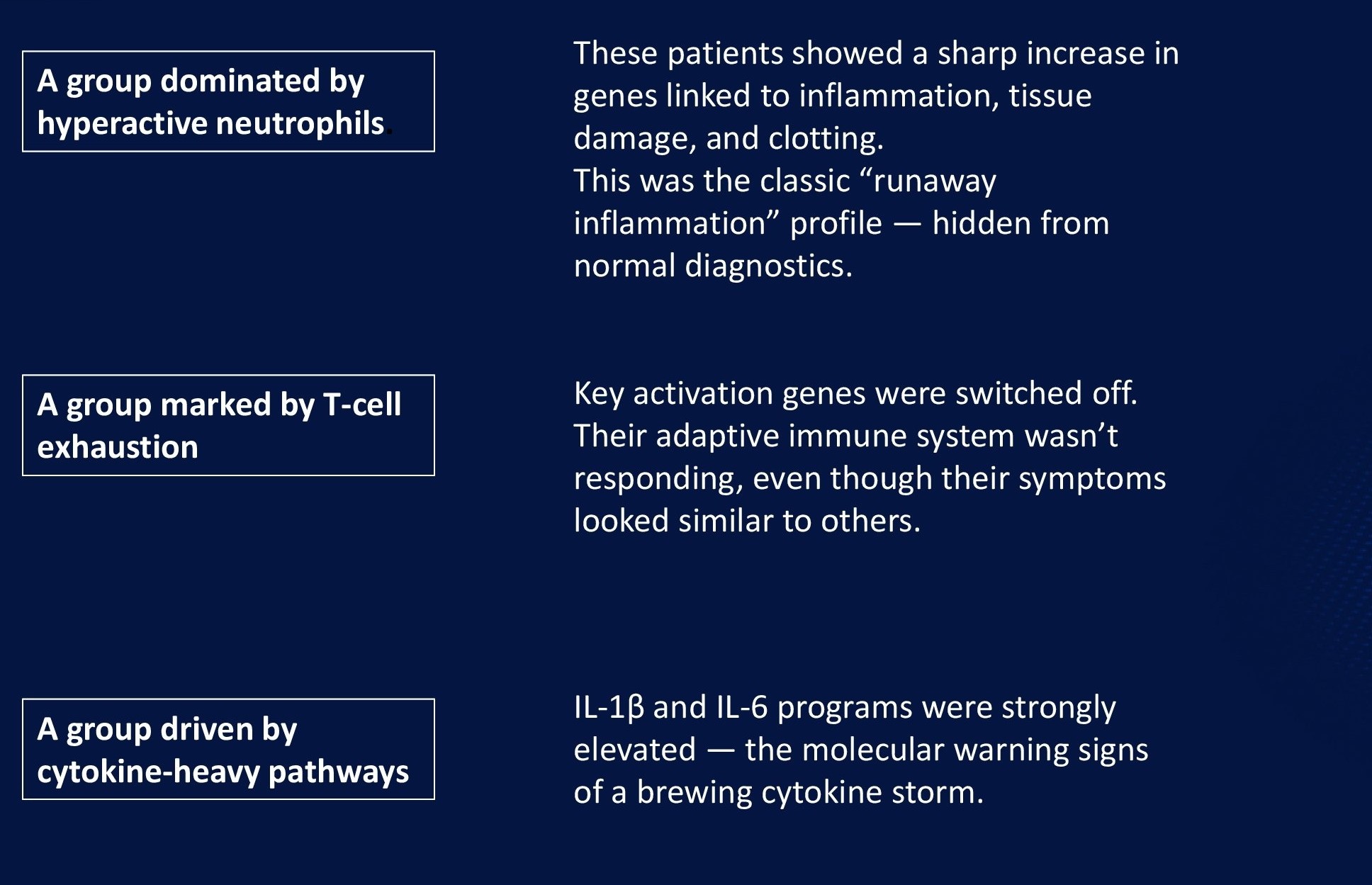
RNA-Seq showed that “severe COVID-19” wasn’t one condition.
It was several distinct immune-response patterns:
Why this mattered for Clinics and Pharma
RNA-Seq offered explanations that routine diagnostics never could:
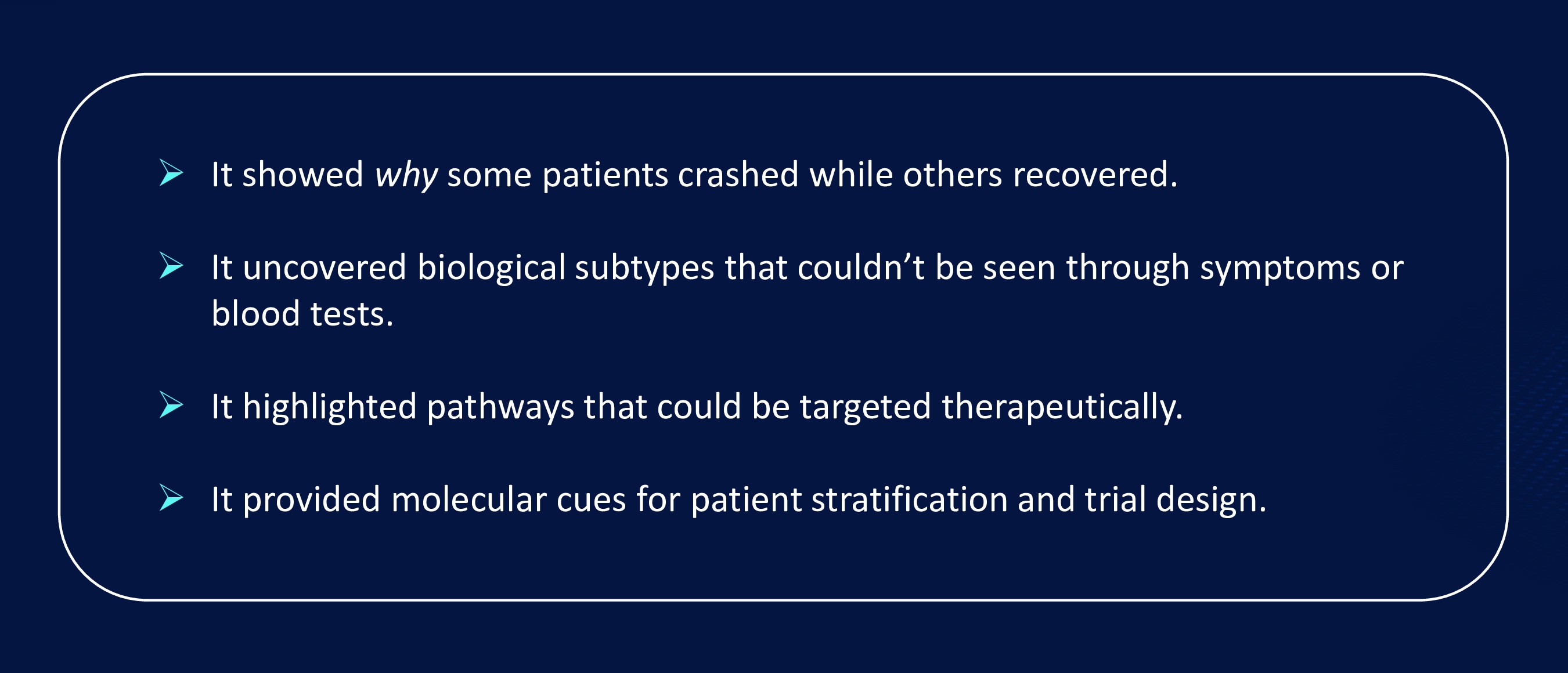
This case captures the real value of RNA-Seq:
It exposes the biology driving disease progression long before clinical symptoms make it obvious
👉Compare gene expression across conditions and discover meaningful differences.
Broader Applications Across Biology
RNA-Seq has reshaped countless research areas — from immunology to neuroscience to precision medicine.
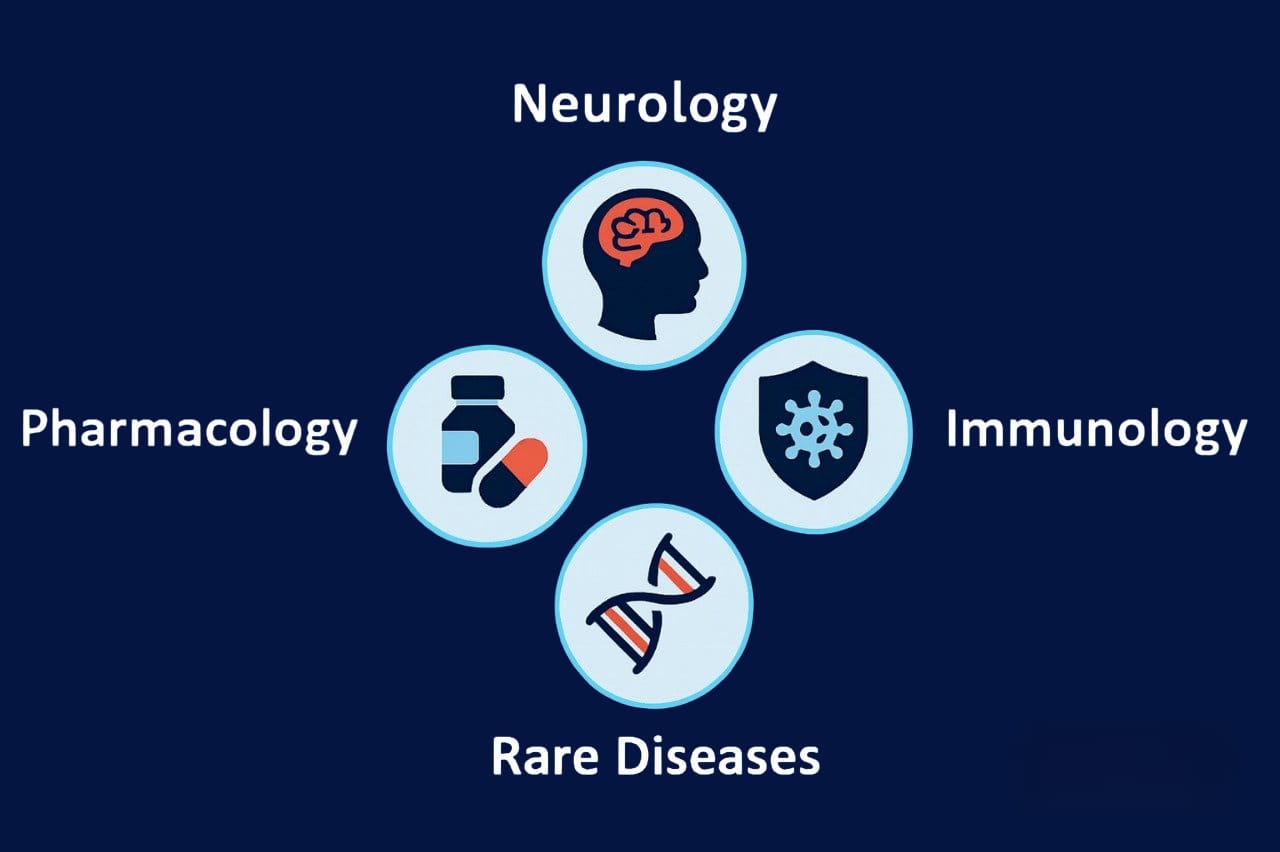
Neurology:
RNA‑Seq helps uncover how gene expression changes shape neural development and degeneration, advancing our understanding of disorders such as Alzheimer’s, Parkinson’s, and epilepsy.Immunology:
By mapping immune cell transcriptomes, RNA‑Seq reveals how immune responses shift during infection, vaccination, or autoimmune disease.Pharmacology:
RNA‑Seq identifies drug responsive genes and pathway alterations, helping researchers understand mechanisms of action, predict toxicity, and refine targeted therapies.Rare disease:
For rare genetic disorders, RNA‑Seq pinpoints splicing defects or expression outliers that DNA sequencing alone might miss, enabling faster and more accurate diagnosis.
In all these cases, RNA-Seq provides one consistent advantage: It doesn’t just measure biology; it reveals biology in motion.
Why This Matters for Research and Development
For biotech, clinical and pharma teams, RNA-Seq offers more than raw data — it delivers actionable insight. Researchers can move beyond static views of biology and instead capture:
A comprehensive snapshot of average cellular activity
Quantitative precision in expression measurement
Discovery of new biomarkers, splicing events, and regulatory RNAs
The challenge lies in the data volume — sequencing can generate gigabytes per experiment, and turning those datasets into biological meaning remains the biggest bottleneck. That’s where aimed analytics platform comes in — an integrated RNA‑Seq analysis platform that delivers clear, ready-to-use results without any coding or statistical expertise.
What Comes Next
This article explores why RNA‑Seq matters and how it reveals a deeper picture of biology. In the next article, we’ll walk through the complete RNA‑Seq workflow — from raw FASTQ files to interpretable biological insights — and highlight common pitfalls to avoid.
👉 Curious to explore RNA‑Seq results interactively without coding? Try out the demo datasets on our aimed analytics platform
References
Gonorazky, H. D., et al. (2019). Expanding the boundaries of RNA sequencing as a diagnostic tool for rare Mendelian disease. American Journal of Human Genetics, 104(3), 466–483. https://doi.org/10.1016/j.ajhg.2019.01.012
Ma, B., Wang, et al. (2023). Mechanisms of circRNA/lncRNA–miRNA interactions and applications in disease and drug research. Biomedicine & Pharmacotherapy, 162, 114672. https://doi.org/10.1016/j.biopha.2023.114672
Schulte-Schrepping, J., Baßler, K., et al. (2020). Severe COVID-19 is marked by a dysregulated myeloid cell compartment. Cell, 182(6), 1419–1440.e23. https://doi.org/10.1016/j.cell.2020.08.001
Byron, S. A., et al. (2016). Translating RNA sequencing into clinical diagnostics: opportunities and challenges. Nature Reviews Genetics, 17(5), 257–271. https://doi.org/10.1038/nrg.2016.10
Yang, X., et al. (2020). High-throughput transcriptome profiling in drug and biomarker discovery. Frontiers in Genetics, 11, 19. https://doi.org/10.3389/fgene.2020.00019
Aschenbrenner, A. C., Baßler, K., et al. (2021). Disease severity-specific neutrophil signatures in blood transcriptomes stratify COVID-19 patients. Genome Medicine, 13(1), 7. https://doi.org/10.1186/s13073-020-00823-5