

How Biotech and Pharma Teams Already Benefit from Our Platform
From faster iteration to reproducible insights — what actually changes in day-to-day research.
The Shift Is Already Happening
In many biotech and pharma teams, one thing has quietly changed:
The bottleneck is no longer data generation — it’s analysis.
RNA-Seq, multi-omics, and high-throughput experiments produce results faster than teams can interpret them. And while the tooling has evolved, the day-to-day reality often hasn’t:
- analyses take days or weeks
- workflows depend on individual expertise
- results are difficult to reproduce or compare

This gap between data and decision-making is exactly where the aimed platform is already creating impact.
Not in theory — but in how teams actually work.
👉 If you want to understand why this gap exists in the first place, we explore it in more detail in our article on why biomedical data analysis needs a reset.
From Waiting for Results → To Iterating on Questions
Traditionally, analysis follows a rigid sequence:
Generate data → send it to a bioinformatician → wait → review → iterate → repeat.
Each iteration can take days.
With the aimed platform, this loop changes fundamentally.
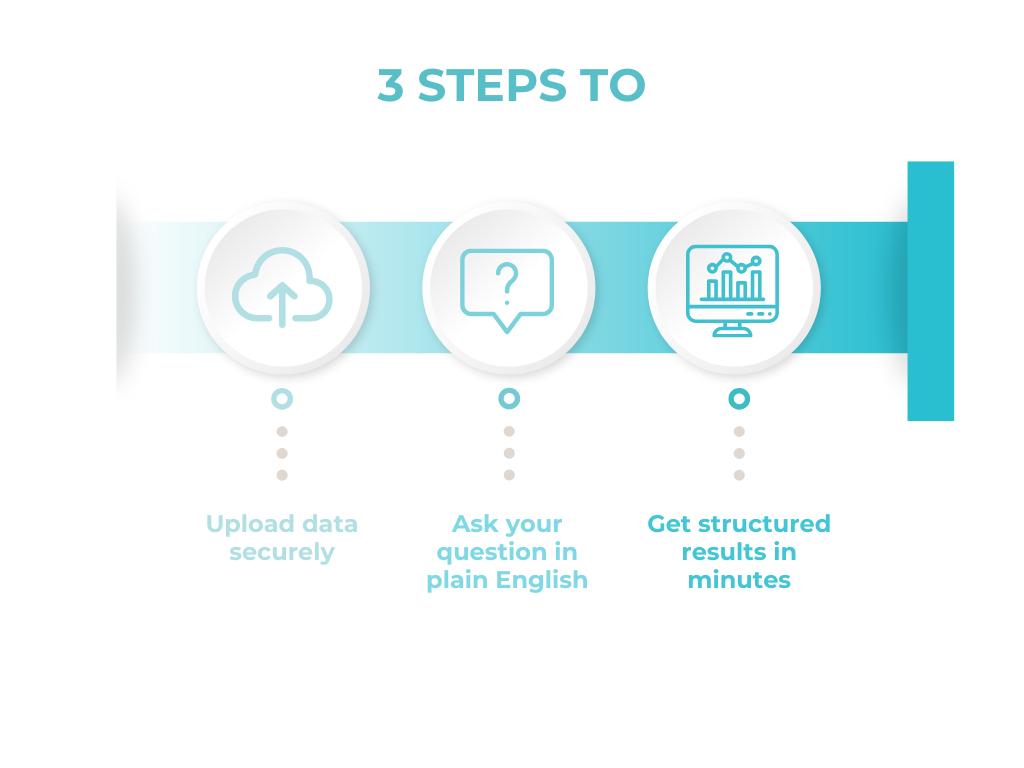
Researchers can:
- upload data
- ask a question in plain language
- receive structured results within minutes
Instead of waiting for a single result, teams can iterate multiple times in the same day.
This shift — from “run analysis” to “explore biology” — is where much of the value comes from.
As described in our platform overview, analyses that previously required days of setup can now be completed in under 30 minutes, fully reproducible and documented.
From Manual Pipelines → To Standardized, Reproducible Workflows
A common issue across organizations isn’t just speed — it’s consistency.
Different analysts may:
- use slightly different parameters
- apply different normalization strategies
- structure outputs differently
Over time, this makes results harder to compare and harder to trust.
The aimed platform addresses this by:
- automatically generating workflows based on the research question
- selecting appropriate methods (e.g. QC, normalization, DESeq2)
- documenting every step
This means:
results are reproducible by default
workflows can be reused across projects
collaboration becomes significantly easier
Running the same analysis later yields identical results — eliminating one of the most persistent pain points in bioinformatics.
From Bottlenecks → To Parallel Workstreams
In many teams, bioinformatics capacity is limited.
This creates a familiar pattern:
- experiments queue up
- analyses are prioritized
- teams wait
With a self-service platform, this dynamic changes.
Instead of relying on a single expert or external provider:
- multiple researchers can run analyses independently
- hypotheses can be tested in parallel
- feedback loops become shorter
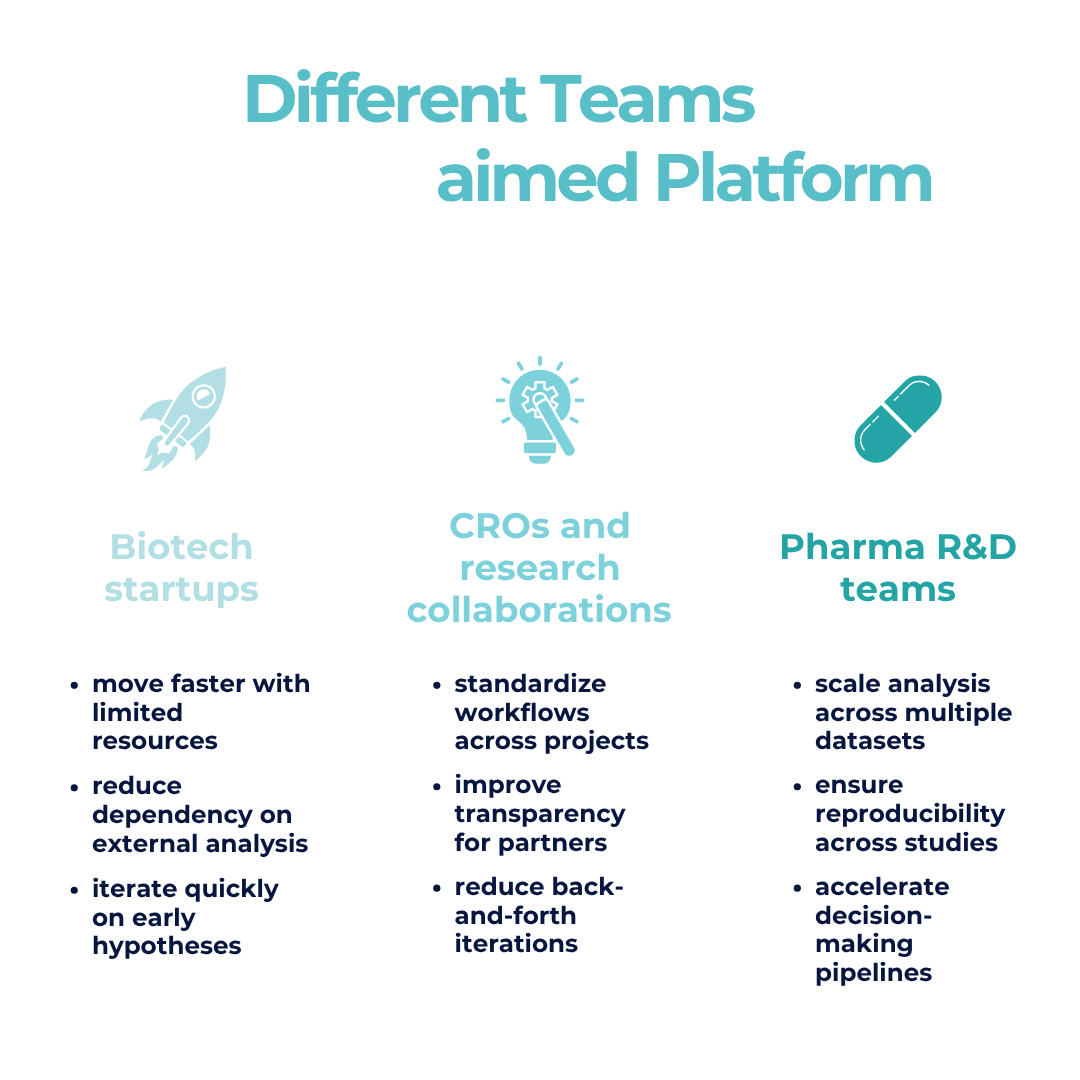
For biotech startups, this reduces dependency on scarce resources.
For pharma teams, it helps analysis keep pace with growing data pipelines.
From Static Outputs → To Interactive Exploration
Another shift happens after the analysis is done.
Traditionally, results are delivered as:
- static plots
- spreadsheets
- reports
Which means interpretation often requires another round of work.
On the aimed platform, outputs are:
- interactive
- structured
- directly linked to the underlying workflow
Researchers can:
explore gene expression patterns
adjust comparisons
move from overview to detail instantly
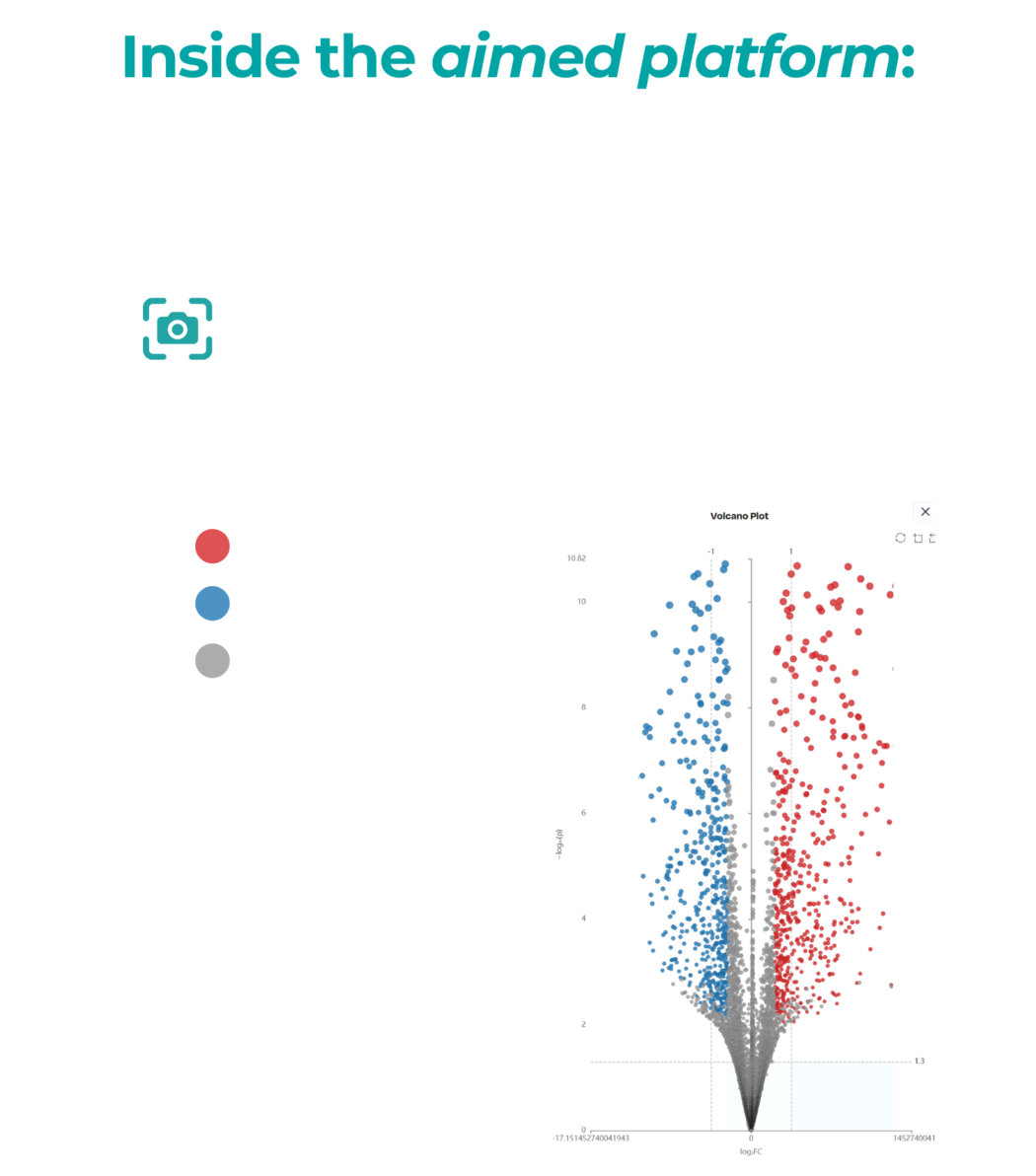
Within minutes, the platform produces publication-ready outputs — including visualizations like volcano plots and heatmaps — all reproducible and transparent.
What This Looks Like in Practice
In a typical RNA-Seq analysis scenario:
Instead of:
- aligning reads manually
- configuring statistical models
- generating plots step by step
The platform:
- detects experimental groups
- builds the model design
- runs differential expression analysis
- generates visualizations
All within a single, reproducible workflow.
In internal test runs, complete analyses — from raw data to visualization — were completed in under 30 minutes.
What This Means for Biotech & Pharma Teams
Across different organizations, the benefits show up in slightly different ways:
The underlying change is the same:
Analysis is no longer a bottleneck — it becomes part of the research flow.
Resetting the Role of Analysis
AI-driven automation in bioinformatics is often discussed as a future trend.
But for many teams, the shift has already started.
When analysis becomes:
- fast
- reproducible
- accessible
something important happens:
Researchers spend less time managing pipelines — and more time understanding biology.
The real value of a platform isn’t just what it can do.
It’s what changes for the people using it.
And for many biotech and pharma teams, that change is already visible:
- faster iteration
- clearer insights
- more confident decisions
Analysis is no longer something that slows research down.
It becomes part of how research moves forward.
👉 Curious how this would work with your own data? Explore the platform or get in touch to see it in action.